Speaker
Description
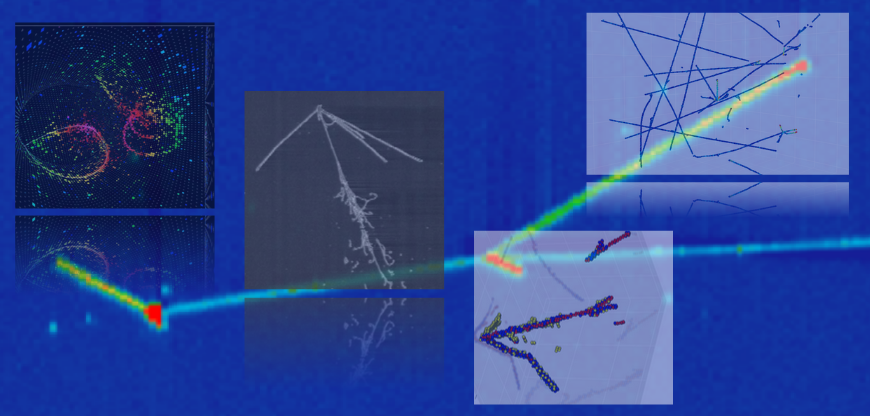
Bridging the gap between data and simulation is one of the most persistent challenges in modern particle physics experiments. Detector calibration aims to shrink this gap by improving the fidelity of detector modeling. Conventional calibration workflows address individual detector effects sequentially. Differentiable simulation offers a compelling alternative: by propagating gradients through the full detector response, all physics parameters can be optimized simultaneously in a single coherent workflow — replacing a fragmented process with one unified, correlation-aware optimization loop. I will present a workflow of calibrating a liquid argon time projection chamber using differentiable simulation, and draw comparisons to conventional calibration approaches to highlight the advantages and challenges, including calibration data input and computational need.This talk will present an assessment of where gradient-based calibration stands today and where the most promising opportunities lie ahead.
| Contribution types | Standard talk (20min + 5min Q/A) |
|---|
